Before you give up on your idea, test who you’re putting it in front of.
A quiet first attempt may tell you something about the audience—not just the idea.
Find your customer-fit toolsIt hurts when something you worked hard on gets polite compliments but no real interest. Before you decide the idea is wrong, take another look at who is seeing it and how clearly you are explaining the help it offers.
You are allowed to adjust the audience without calling the whole effort a failure. The next conversation can teach you more than another evening wondering what went wrong.
When you test a business idea, you are testing more than the product. You are also testing the customer, the message, the setting, and the next step you ask someone to take.
A coffee cart found a better fit
In a September 25, 2026 Business Insider as-told-to article, Nitro Bar cofounder Audrey Finocchiaro recounts a slow start for the coffee cart she built with her partner, Sam. A visit to Brown University brought a sellout. Bringing the cart back to that campus helped them find customers who wanted their coffee.
That example does not mean moving an offer guarantees sales. It suggests a question worth investigating: was the offer weak, or had it not yet reached a suitable audience?
The practical lesson here is to test customer fit honestly, within a budget and schedule you can manage. A quiet first attempt gives you information to examine; it does not explain every reason people did not buy.
Start with a person, not “everyone”
“Anyone who likes coffee” is a broad audience. So is “any business owner” or “anyone who needs help.” You will learn more when you can describe the person, the situation, and the problem your offer addresses.
A beginner selling a meal-planning worksheet might start with working parents who need a simpler weekday routine. An inbox organizer might focus on solo service providers who miss important messages. A local photographer might explore a specific kind of small-business event.
These are examples to investigate, not proven markets. The useful change is that each gives you someone to talk to and a need to ask about.
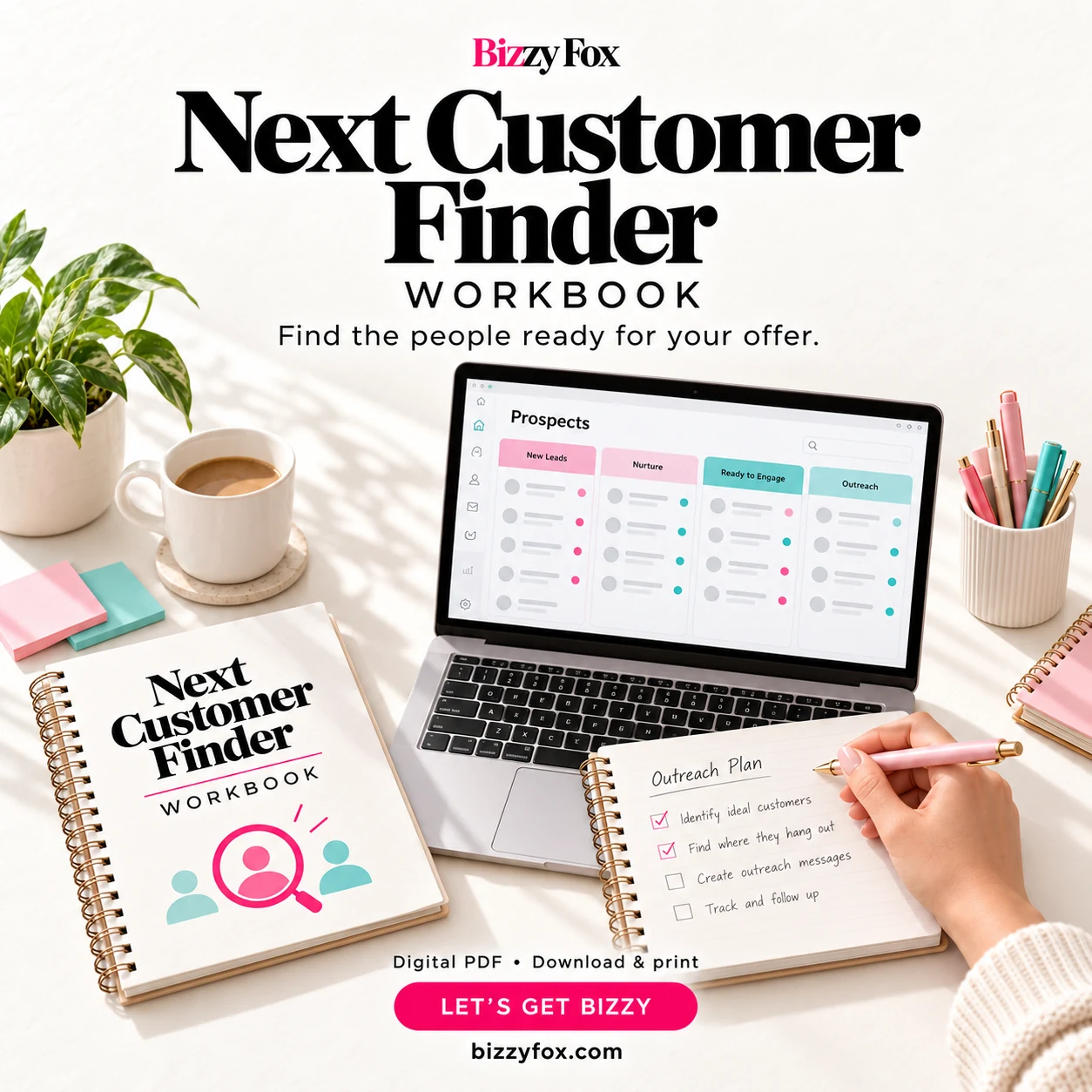
If you need help narrowing the audience, the Next Customer Finder workbook gives you a place to organize your customer thinking. If you are still choosing a business direction, start with Find Your Fit.
Check the place and the moment
For local business ideas, customer fit includes where people are, when they need the offer, and how easily they can buy. A product can be useful but inconvenient in a particular setting. A service can solve a real problem but reach someone before they are ready for it.
The same question applies online. A download posted to a general audience may get less meaningful attention than an explanation shared with people already trying to solve the problem. That does not mean entering communities just to advertise. Learn their rules, contribute usefully, and seek permission where needed.
Before changing your offer, consider:
- Audience: did people with the relevant need actually see it?
- Context: were they looking for a solution, browsing casually, or focused on something else?
- Clarity: could they quickly understand what they would receive?
- Access: was the next step clear, convenient, and available?
If the offer itself is difficult to explain, read From idea to first offer before spending more effort promoting it.
Ask what happened instead of guessing
Low sales can have several causes: little exposure, weak demand, unclear wording, a price that does not fit the value, missing trust, or a buying process that gets in the way. A different audience is one possibility—not the answer to every slow start.
Talk to a few people who resemble your intended customer. Ask what they currently use, when the problem occurs, and what would make trying a different solution worthwhile. If they viewed your offer, ask what was clear and what made them hesitate.
Listen without turning every response into a sales pitch. Specific answers help you distinguish “I do not need this” from “I did not understand it” or “I need it, but the timing is wrong.”
Run one small, honest comparison
Choose one thing to change so the next attempt teaches you something. You might present the same offer to a more specific customer group, try an appropriate second location, or describe the result more clearly.
For a local test, check venue permission, permits, safety requirements, and costs first. For an online test, follow the platform’s rules and avoid unsolicited bulk promotion.
Set a time and spending limit before you begin. Keep a short record of where you shared the offer, who it reached, the questions people asked, and what happened next. Separate purchases from likes and compliments. If there were sales, record delivery time and expenses too.
A small test may not tell you everything, especially if very few people saw the offer. Use it to decide what to investigate next rather than declaring success or failure from one result.
Give yourself room to adjust—or stop
Testing customer fit is not a reason to keep spending indefinitely. Sometimes the next step is a clearer offer or a better setting. Sometimes the costs, demand, or delivery work tell you to pause, change direction, or let an idea go.
If you are still looking for an idea that fits your everyday skills, read Your first business idea might already be part of your everyday life.
Before you give up on the idea you have, look at the evidence around it. Who saw it? What did they need? What did they understand? A more focused test can help you make your next decision with greater clarity.
Find your customer. Find your fit.
Use a workbook to explore who your offer could help, or compare business ideas that fit your interests and schedule.
Source & attribution
The Nitro Bar example comes from Business Insider’s September 25, 2026 as-told-to reporting, told by Audrey Finocchiaro to Morgan Rizzo: “I started The Nitro Bar with $1,500 and wood from my basement. Here’s how I grew it to a 7-figure business.”
This is an original Bizzy Fox educational article with a brief attributed example. Bizzy Fox did not interview the founders and is not affiliated with The Nitro Bar or Business Insider. The customer-fit framework and practical recommendations are our own. Individual business results are not guaranteed.
Your first business idea might already be part of your everyday life
Notice a familiar skill, identify who it helps, and give one small offer a chance.
Read the article